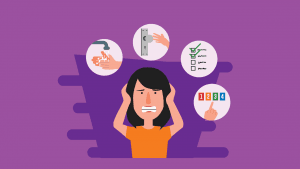
Obsessive-compulsive disorder affects roughly 2 percent of adults at some point in life. In the US National Comorbidity Survey Replication, Ruscio and colleagues (2010) estimated a lifetime rate of 2.3 percent. Many of these people also have heart disease, diabetes, thyroid problems, or chronic pain, and they take other medicines. This matters because medication for this disorder is often dosed differently from medication for depression.
How obsessive-compulsive disorder is treated and why the doses differ
Two treatments have the strongest support. The first is cognitive behavioral therapy with exposure and response prevention, in which a person deliberately faces a feared situation and chooses not to perform the ritual that usually follows. The second is a medicine that raises serotonin activity, most often a selective serotonin reuptake inhibitor (SSRI). Clomipramine, an older antidepressant, is another option.
A network meta-analysis by Skapinakis and colleagues (2016) compared many treatments in adults. It found that SSRIs, clomipramine, and cognitive behavioral therapy were all more effective than control conditions. The American Psychiatric Association practice guideline (Koran et al., 2007) likewise supports therapy, medication, or both, depending on severity, the person’s preference, and what is available locally.
Doses for this disorder are usually higher than the ones used for depression. Bloch and colleagues (2010) pooled randomized trials of SSRIs and found that higher doses were linked to a greater reduction in symptoms. The trials compared groups, so the result describes an average and cannot predict how one person will respond. Higher doses also bring more side effects, so the dose is raised in steps.
Patience is part of the plan. Improvement in obsessions and rituals tends to come more slowly than improvement in low mood. A fair trial usually means eight to twelve weeks, with several of those weeks at the highest dose the person tolerates. Stopping at week three because nothing has changed is a common reason people conclude that medicine does not work for them.
Why other illnesses and medicines change the dose
Most antidepressants are broken down by liver enzymes, and the kidneys clear what remains. When the liver or kidneys work less well, or when age slows these processes, the same dose produces a higher level in the blood. A dose that is reasonable for a healthy 30-year-old may cause nausea, tremor, or confusion in an 80-year-old with other illnesses.

Drug interactions add to this. Fluvoxamine strongly blocks an enzyme called CYP1A2. That can raise blood levels of caffeine, theophylline (used for asthma), and clozapine. Paroxetine and fluoxetine block CYP2D6, which can change how the body handles some heart medicines such as metoprolol, and how tamoxifen is converted into its active form. These effects are well described, and a pharmacist can check for them in minutes.
Some safety limits are specific to the drug. Citalopram can lengthen the QT interval on an electrocardiogram, which raises the risk of a dangerous heart rhythm, so its maximum dose is lower in people over 60 and in those who break it down slowly. SSRIs also raise bleeding risk when combined with anticoagulants or anti-inflammatory painkillers, and they can lower sodium levels, especially in older adults.
Consider a man in his late sixties, taking a blood thinner and a medicine for heart rhythm, who washes his hands until the skin cracks. His doctor chooses a drug with few interactions and raises the dose slowly. Blood tests check his sodium, and an electrocardiogram is repeated after each increase. Progress is slower than in a younger patient, but the risks stay small.
When a person has several illnesses, the right dose for obsessive-compulsive disorder is the one that is high enough to work and low enough to be safe for that particular body.
In some situations a blood test can guide the dose directly. The consensus guidelines for therapeutic drug monitoring (Hiemke et al., 2018) recommend measuring drug levels when interactions are likely, when liver function is reduced, in older patients, or when there is no response at a normal dose. The test does not suit every patient, but it helps when the dose is hard to judge.

What to tell your prescriber and what to expect
Bring a complete list of everything you take, including over-the-counter pain relievers, sleep aids, herbal products, and supplements. St. John’s wort, for example, interacts with many drugs and can be dangerous when combined with an SSRI. Mention how much coffee you drink, since fluvoxamine can make caffeine effects stronger. Ask a pharmacist to review the list whenever any medicine is added or changed.
Report new symptoms early. Unusual bruising or bleeding, palpitations, fainting, severe headache, new confusion, or marked restlessness should be reported to a doctor promptly. Do not stop an SSRI suddenly. Stopping abruptly can cause dizziness, irritability, and flu-like symptoms, and it can also bring the obsessions back. Any reduction should be planned with the prescriber.
Therapy matters even more when medication is limited by health problems. Exposure and response prevention does not interact with other drugs, and it can lower the dose of medicine a person needs. If you cannot find a therapist trained in it, ask your doctor about referral options, including supervised online programs. Family members can help by learning not to take part in rituals or give repeated reassurance.
Finally, treatment of this disorder in someone with other medical conditions is rarely a single decision. Doses are adjusted, results are checked, and the plan changes as health and medicines change. A person who knows this at the start is less likely to give up when the first dose, or the first drug, is not the right one.
References
- Bloch, M. H., McGuire, J., Landeros-Weisenberger, A., Leckman, J. F., & Pittenger, C. (2010). Meta-analysis of the dose-response relationship of SSRI in obsessive-compulsive disorder. Molecular Psychiatry, 15(8), 850-855.
- Hiemke, C., Bergemann, N., Clement, H. W., et al. (2018). Consensus guidelines for therapeutic drug monitoring in neuropsychopharmacology: Update 2017. Pharmacopsychiatry, 51(1-2), 9-62.
- Koran, L. M., Hanna, G. L., Hollander, E., Nestadt, G., & Simpson, H. B. (2007). Practice guideline for the treatment of patients with obsessive-compulsive disorder. American Journal of Psychiatry, 164(7 Suppl), 5-53.
- Ruscio, A. M., Stein, D. J., Chiu, W. T., & Kessler, R. C. (2010). The epidemiology of obsessive-compulsive disorder in the National Comorbidity Survey Replication. Molecular Psychiatry, 15(1), 53-63.
- Skapinakis, P., Caldwell, D. M., Hollingworth, W., et al. (2016). Pharmacological and psychotherapeutic interventions for management of obsessive-compulsive disorder in adults: A systematic review and network meta-analysis. The Lancet Psychiatry, 3(8), 730-739.