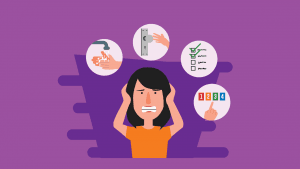
Hypochondria is the traditional name for an intense fear of having a serious illness, a fear that stays in place even after doctors have examined the person and found nothing wrong. The word is still common in everyday speech, but medicine now uses more precise terms. This article explains what those terms mean, why the worry persists, and which treatments and daily habits help.
What Hypochondria Means in Current Diagnosis
The DSM-5, the main diagnostic manual used in the United States, divided the old diagnosis of hypochondriasis into two. Illness anxiety disorder describes people who have few or no physical symptoms but are convinced they are ill or will soon become ill. Somatic symptom disorder describes people who have real symptoms, such as pain or fatigue, and respond with excessive worry.
Many researchers prefer the broader term health anxiety, because the problem exists on a range. Nearly everyone worries about a lump or a headache at some point and calms down after a normal result. In illness anxiety disorder the worry lasts at least six months, takes up hours of the day, and interferes with work, sleep, and relationships.
The condition is not rare. Sunderland and colleagues (2013) surveyed a large national sample of Australian adults and found that health anxiety went together with other anxiety and mood problems, with disability, and with frequent use of health services. Because this was a survey taken at one point in time, it shows an association. It cannot tell us which problem came first.
People with hypochondria are not pretending, and they are not wasting anyone’s time on purpose. The fear is real, the physical sensations they notice are real, and the distress is often greater than that of people who actually have the illness they fear.
Why Checking and Reassurance Keep the Fear Going
The body produces sensations all day, such as a skipped heartbeat, a twinge in the side, or a tingling hand. Most people never notice them. A person with health anxiety notices and reads the sensation as a sign of danger. Fear then raises the heart rate and muscle tension and draws more attention to the body, which produces more sensations to worry about.
Consider a teacher in his forties, a composite of several patients, who began checking his pulse many times a day after a colleague died of a heart condition. Whenever the pulse felt uneven, he became afraid, and the fear made his heart beat harder. An electrocardiogram was normal. He felt relieved for two days, and then he began to wonder whether the test had missed something.

Behavioral therapists describe this pattern clearly. Checking the body, searching symptoms online, asking relatives, and booking extra appointments all bring short relief, so the person repeats them. Avoidance works the same way. Some people stay away from hospitals, medical news, or even their own doctor, and so never learn that the feared outcome does not happen.
Reassurance brings relief that is real but brief, and each time it is sought, the mind learns that the fear needed an answer.
Searching symptoms on the internet deserves a separate mention. A search for a common symptom returns a mix of harmless and serious explanations, and an anxious reader tends to remember the serious ones. The search rarely ends with a clear answer, so it is repeated. Many people describe spending hours each evening reading about conditions they do not have.

Treatments That Work and Practical Steps at Home
Cognitive behavioral therapy has the strongest evidence. It helps the person test fearful predictions, reduce checking and reassurance seeking, and face situations they avoid. Olatunji and colleagues (2014) pooled the available trials and found that this therapy reduced symptoms of hypochondriasis and health anxiety more than control conditions did.
A large trial supports the same conclusion in routine medical care. Tyrer and colleagues (2014) assigned more than 400 patients from general hospital clinics to cognitive behavioral therapy or standard care. Health anxiety was lower in the therapy group after one year. These patients had been referred by medical specialists, which suggests the treatment can work for people who first seek help from a doctor.
Access to therapists is limited in many places. Axelsson and colleagues (2020) compared internet-delivered therapy with face-to-face therapy in a randomized trial and found the internet version was not worse. Guided online programs may therefore be a reasonable first step when waiting lists are long, although the quality of programs varies and a therapist should guide the process.
Medication can also help, mainly antidepressants of the SSRI type, particularly when depression or another anxiety disorder is present. The evidence is less solid than for psychotherapy, and the choice should be made with a doctor. Sedatives are best avoided as a regular solution, since they ease the fear for a few hours and do not change the habits that keep it alive.
Several steps can be started at home. Agree with one trusted doctor on scheduled visits instead of visits triggered by a bad moment. Choose one fixed time a day for checking the body, if checking cannot stop at once, and gradually shorten it. When the urge to check or search appears, wait fifteen minutes before acting. Many people find the urge weaker after the wait.
Family members can help by answering a worry kindly once and then changing the subject, instead of giving the same reassurance ten times. Regular sleep, daily physical activity, and less caffeine also reduce the bodily sensations that start the worry. A new or changing symptom should still be assessed, since people with health anxiety can become ill like anyone else.
Health anxiety often occurs together with depression. If hopelessness or thoughts of self-harm appear, contact a doctor or a crisis service promptly, for example by calling or texting 988 in the United States. When you see a professional, describe what the worry does to your days, how much time it takes, and what you do to relieve it. That description is often more useful than a list of symptoms.
References
- Axelsson, E., Andersson, E., Ljótsson, B., Björkander, D., Hedman-Lagerlöf, M., & Hedman-Lagerlöf, E. (2020). Effect of internet vs face-to-face cognitive behavior therapy for health anxiety: A randomized noninferiority clinical trial. JAMA Psychiatry, 77(9), 915-924.
- Olatunji, B. O., Kauffman, B. Y., Meltzer, S., Davis, M. L., Smits, J. A. J., & Powers, M. B. (2014). Cognitive-behavioral therapy for hypochondriasis/health anxiety: A meta-analysis of treatment outcome and moderators. Behaviour Research and Therapy, 58, 65-74.
- Sunderland, M., Newby, J. M., & Andrews, G. (2013). Health anxiety in Australia: Prevalence, comorbidity, disability and service use. The British Journal of Psychiatry, 202(1), 56-61.
- Tyrer, P., Cooper, S., Salkovskis, P., Tyrer, H., Crawford, M., Byford, S., et al. (2014). Clinical and cost-effectiveness of cognitive behaviour therapy for health anxiety in medical patients: A multicentre randomised controlled trial. The Lancet, 383(9913), 219-225.